Blog Disclaimer

The posts published in this blog are collected from different blogs or websites written by various famous bloggers/writers. I have just collected these posts only. These posts are not written by me. All collected posts are the great stuffs.

Blog Disclaimer

All content provided/collected on this blog is for informational purposes only, it is not used for any commercial purpose. At the end of any post, the visitor can find the link of the original source.

Blog Disclaimer

At the end of any post, the visitor can find the link of the original source. These posts are only for further reference to review/study latter. It’s a request to all visitors; please go through the original post by clicking on the source given below/above of every post.

Showing posts with label FaceBook PPC. Show all posts

October 15, 2013

Best Marketing Tools to Spy on Your Competitors

There are dozens of marketing tools that you’re probably already using to monitor your own performance. These can be used to get competitive intelligence. Let’s assume you already know who the competition is. All you have to do is monitor these different areas.

Ad Monitoring Tools

Do you want to know where your competitors are advertising so you can do the same? Would you like to know which keywords they are targeting? If you want to troubleshoot your PPC and display ads, this set of tools will help you:
1. Adbeat is an enterprise tool that lets you see all of the ads that particular advertisers are using, split test their ad copy to help you with strategy, and find competitors you didn’t even know about. The introductory package starts at $99 per month, though that monitors only Google ads. There’s a 30-day free trial.
2. AdGooroo is a multifunctional tool that includes a Display Insight feature. The basic service lets you monitor ads for up to ten competitors, ranked by page views. Its Industry Insight allows you to figure out ad placements, too. Pricing is not stated.
3. AdGooroo also has an SEM Insight tool that incorporates keyword research, competitive intelligence, PPC and SEO tools, and traffic data. Pricing is not stated.
4. MixRank allows you to see the mix of ads that companies are using. You can see a snapshot of this data (without registering) that covers display ads, text ads, advertisers, and demographics, though you will have to create an account for the full report.
5. Moat provides a free ad search tool that allows you to key in your competitors’ brand names and see what ads they have shown recently. You can see the size and some of the places the ads have been seen recently, giving you a good guide for where to place your own advertising.
6. SocialAdNinja has a database of 400,000 social PPC ads. It’s a great tool for monitoring global Facebook advertising. It includes fine-grained search features so you can identify ads targeting your key demographic and find out which links they point to. There’s a single membership level at $147 per month.
7. WhatRunsWhere helps you monitor competitors to figure out their advertising strategy and where they are placing ads. As a bonus, it can help with advertising research and split testing, finding new sources of traffic, and ad buying.

Keyword Monitoring Tools

Related to ad monitoring tools are those that help you check out the keywords your competitors are targeting in their search marketing campaigns. Do this, and you can improve your own ROI by figuring out what’s working for them. Here’s a selection:
8. iSpionage looks at how your competitors are advertising with Google, Microsoft, and Yahoo search marketing tools. You can view ads and track spending. It also includes SEO competitive research and a social monitoring tool for Twitter and Facebook.
9. KeywordSpy helps with competitive keyword discovery. You can find out how much your competitors are spending on AdWords and discover which combinations of keywords and advertising copy are working for them.
10. KeywordCompetitor helps you spy on organic and paid keywords, ads, and landing pages for your competitors, with daily updates in rankings. The site also has tools for monitoring competitors and working with affiliate marketing.
11. SEMrush lets you monitor competitors’ organic keyword positions, find relevant long tail keywords, see your competitors’ PPC ads, and more. It also includes SEO tools. There’s a wealth of data available from the free search bar on the homepage, though you will have to upgrade ($69.95 per month) for more queries and results.
12. SpyFu lets you see up to six years of data on your competitors’ keywords, ranking, and ads helping you with SEO and PPC advertising. There’s a limited free tool, though you have to subscribe for access to advanced competitive intelligence.
13. The Search Monitor looks at paid and organic search and even how you look against your competition in comparison-shopping engines. This multifunctional tool also monitors affiliates and trademarks as well as who’s discussing your brand. It starts at $299 per month.

Link Popularity and Backlink Tools

All of the tools you use to check who’s linking to your site can be used to research your competitors’ backlinks. All you have to do is plug in their URL. There are dozens of backlink checkers out there, but here are three excellent ones:
14. Ahrefs provides a wealth of information on external links, referring domains and IPs, top pages, main anchor text, linked domains, and more. There’s a limited free account covering 3 reports and 10 results, but for fuller data you’ll need to upgrade to the $79 per month package.
15. Majestic Site Explorer provides a detailed link profile for any site. In addition to working with current data, you also can check its historical index to see results over time. There is a limited free version.
16. Open Site Explorer describes itself as a search engine for links. It provides information on page and domain authority, linking domains, anchor text used, and more; you also can compare link profiles for up to five sites. It is free, though signing up for Moz Analytics gives you access to (much) more data.

Web Ranking Tools

How are people interacting with your competitors’ sites? The next set of tools provides website competitive analysis on consumer data to help companies improve their targeting in different segments.
A free search gets you data on unique visitors, rank, and competitive rank, but you’ll need to sign up for more in-depth tools.
17. Alexa has been tracking global web traffic for a couple of decades and using it to provide website ranking on a global and country basis. The traffic sources and other data can help with benchmarking your site against your competitors.
18. Compete describes itself as a “digital intelligence” tool which uses online consumer behavior.
19. SimilarWeb is a competitive analytics-monitoring tool that provides data on traffic sources, top content, social mentions, and more. There’s a lot of data available for free, including referral sites, search traffic, key topics and more. Pro packages start at $99 per month.

Monitoring and Mentions

Often recommended for monitoring mentions of your own brand, social media monitoring tools work equally well for seeing what people are saying about your competitors.
20. Google Alerts saves you the trouble of visiting the site to repeatedly perform the same search. Set up an alert and have the latest news about your competitors delivered to your inbox. It monitors news, blogs, video, discussions, and books, and it is free.
21. Mention combines media and social monitoring. It tracks content published on web pages, news sites, blogs, and forums in 42 languages. It provides real time social alerts and has an excellent mobile app. There’s a free plan, with the upgrade starting at $6.99 per month.
22. Social Mention provides real time search of brand mentions on blogs, microblogs, images, videos, questions, and bookmarking sites. This free web search tool also provides a broad brush sentiment analysis.
23. Talkwalker offers a service similar to Google Alerts, giving you the choice of monitoring news, blogs, discussions, or everything. You also can monitor content in different languages. It is free.
24. Topsy allows you to search tweets from 2006 forward, looking at links, photos, videos, influencers, and more. The free online search can provide a snapshot of a competitor’s Twitter presence, but you will need the pro version for real time results and alerts, reports, and identification of key influencers.
25. You also can use Twitter’s own search tool and save your searches, though the basic search doesn’t provide the depth that Topsy has.

Social Engagement and Social Sentiment Tools

This next batch of tools will help you to see how your competitors are building engagement and how their key audiences feel about them.
26. Commun.it is best known as a free tool for building engagement on your own Twitter account. Why not plug in the URL of your top competitor to see how that company is performing online?
27. Fanpage Karma allows you to input the URL of any Facebook fan page and assess the number of fans, growth, and a range of other performance metrics. There’s a 14-day free trial of additional features, and the premium package includes Twitter monitoring, too.
28. Login with your Twitter account and you can analyze any profile’s followers for free with Followerwonk. There’s a wealth of detail available on the authority of followers, recent tweets, bios and locations, enabling you to build a comprehensive picture of your competitor’s Twitter presence.
29. Open Social Buzz provides real time search of Twitter, Google+, Facebook, and LinkedIn. Plug in your competitor’s name and see how much social prominence they have.

A Mixed Bag

There are a few tools that don’t fit in any of the categories above, which can provide additional insight into what your competitors are doing.
30. BuiltWith investigates the technology behind your competitors’ sites, covering servers, content management, underlying technology, analytics, advertising, and much more.
31. Marketing Grader is a free HubSpot tool that assesses websites in terms of blogging, social media, SEO, lead generation, and mobile, giving an overall score. It’s a good way to see what your competitors are getting right, and wrong
32. Simply Measured rolls many of the tools on our list into one, including analysis of influencers, brands, trends, traffic, conversions, competitors, and more. It covers all the main social media channels with 35 different reports. The basic plans start at $500 per month, though there are free reports available for your own accounts.
33. The Wayback Machine from the Internet Archive lets you see how your competitors’ pages looked in the past. You never know, you might learn something about how website changes improved conversions.
34. Check out your competitors’ direct mail, email, and social campaigns with Who’s Mailing What. It’s a good way to keep track of trends, get ideas, and see what the competition is up to. This tool costs $747 per year.

Final Thoughts: Other Ways to Spy on the Competition

Don’t forget that there are three more ways you can find out what your competitors are doing, and they are all free.
35. Follow them on social media, add them to a list or interest group, and track what they are talking about.
36. Subscribe to their blogs so you can see what kind of content they are covering and check out announcements of forthcoming launches.
37. Sign up for their newsletter, which is hands-down the best way to see how they are targeting your ideal customers.

What other great tools have you discovered for tracking the competition?

About the Author: is the CEO of TOFU Marketing, an internet marketing agency that helps startup companies hack their growth. You can request a free consultation with him here.

****Note : I am just sharing this Great Post published The visitor of this blog can directly view the original post by clicking on the source link given Below***** 


Source :


http://blog.kissmetrics.com/

February 10, 2013

Most Misleading PPC Metrics


Search marketers depend on data to make decisions. Bids are raised, keywords are paused, and ad text is changed based on data. Unfortunately many decisions are being made based on metrics that portray results in a misleading fashion.
While all of the following metrics are important, when looked at individually, they can cause you to make misinformed decisions.

Impression Share

google-impressions-share-of-voice-exact
This metric is most likely one of your Google rep’s favorite. Impression share, while valuable in some cases, can provide a drastically inaccurate snapshot of your PPC campaign’s performance.
As SEM managers do their thing, keywords are paused, bids are decreased or increased,dayparting is set up all based of performance. If a set of keywords doesn’t convert well or isn’t relevant to your business, then don’t use them. When impression share is calculated it doesn’t take your optimizations efforts into an account and thus can be quite inaccurate.

Time on Site

Another metric, while valuable, that can provide an inaccurate look into your campaign performance. This metric was useful back in the ’90s when everyone was sending traffic to their homepage and expecting the user to find what they were looking for. Now this metric is becoming increasingly irrelevant with campaigns that use sitelinks to send people to the most relevant page on the site.
Analytics tools such as Google Analytics also come with some flaws related to this metric. Analytics tools often only track up into the last action taken by a site visitor and don’t accurately record how long the visitor stays on the last page of their visit. For more info on this discrepancy please check out this article.

Average CPC

Averages lie, as Melissa Mackey pointed out in an earlier SEW post. When it comes to CPCs, your “average” only tells part of the story.
For example, throughout the day your CPC is heavily affected by your competition. You may bottom out at $2.00 CPCs and spike at $100. But paying attention only to your average CPC can cause you to grossly under estimate or over estimate what you're paying per click.

Average Position

Just as an average CPC can throw you off track, your average position can do the same. A metric that is heavily dictated by your competition it is important to understand the landscape of your industry.
The numbers of competitors bidding on your keyword set, how many ads are showing in the “top” of SERPs, and other metrics need to be included when making decisions based off of average position.

Daily Budget

OK, this one isn’t a metric, but it belongs here. As many SEM managers know, Google and Bing take your daily budget caps less than seriously. In some cases, you can overspend your budget by up to 20 percent. This can be fine for someone spending $100 a day for a campaign but for someone capping out at $5,000, it can be a big difference.

Conversions Rate

Without a doubt, keeping an eye on your conversion is important. However, depending on your business model, you may be misled by this metric.
When looking at conversion rate from the 50,000 foot level, it can be a great number to show thehealth of your PPC account. But for day-to-day management, other factors such as the margin of products sold and how you value your different conversions should be the priority.
For example, let’s say you sell one product, but in three different sizes. Each size is sold at a different price and provides a different product margin. Here is the example:
conversion-rate-data
In this case, the advertiser makes a larger profit margin on the large size. If looking at conversion rate all up across the three products, it could lead you to make a poor decision. Taking the next step and granularly breaking out the data will help boost performance.

CTR

Click-through rate can be easily manipulated by an SEM manager by boosting your bid and getting your ad into the top 3 positions, using sitelinks or other ad extensions or by utilizing ad text that contains discounts or promotions (Free Shipping, 50% Off, etc.)
Decisions on keyword shouldn’t be based on CTR alone. If a keyword has a historically low CTR but converts below your target CPA and provides profit for the company, then you shouldn’t worry about CTR. Yes, you should attempt to increase your CTR, but the most important factor is how it works out financially for your business and/or client.

First Page Bids

First page bids have been a topic of contention for AdWords and me. There have been numerous times when my average position is above 3 but my bid is below the first page bid estimate. First page bid can be used as a guideline, but some simple manual bidding can help you figure out where your bid needs to be to get on the first page.

Quality Score

google-quality-scoreThere will always be a debate on how important quality score is and if you should be bidding on keywords that have a low quality score. The argument then stems to how these keywords are affecting the rest of your account.
The bottom line when it comes to quality score should beyour bottom line.
For example, as highlighted in my post about bidding on competitor terms, if the keywords convert and are profitable, then keep using them – no matter what your quality score is. Do continue to optimize and attempt to raise your quality score, but don’t make it the single factor.

Recap

All of the above mentioned metrics are important to managing you PPC efforts but they all need to be examined and weighted correctly. No single metric should be the single reason you to pause a keyword or shut down an entire ad group. Performance should be judged by multiple metrics and – ultimately – if it's profitable for your business and/or client.
By 

January 31, 2013

Internet Advertising Timeline - A Breif History of Online Advertising


Today, marketers barely remember what it was like to do print ads, traditional press releases, and TV/radio spots. Internet advertising took stale and generic ads and turned them into dynamic, extremely targeted messages.
Before banner ads and AdWords caught on like wildfire, the Internet as an information database transitioned into a full-blown marketplace. The most notable example of an industry leader that caused a paradigm shift for businesses was eBay.com. All of a sudden, brick-and-mortar establishments seemed too involved when consumers could simply do their shopping and selling from home. People could run their businesses from the comforts of a clunky desktop computer with the help of a dial-up modem, free AOL trial, scanner, and half-decent camera (film, probably). Buying and selling merchandise across the web got the world’s attention and people began to realize the potential of the World Wide Web. Then, in walks the behemoth with a mission to catalog every piece of data in the world and make a pretty penny through search advertising: Google.

Once people became comfortable with shopping on the Internet, there was a rush of companies that wanted a piece of the market and they all began building websites and advertising online. The dot com boom got people thinking they struck gold. Marketers scrambled to adapt during the first dot com boom only to quickly be shocked with the proceeding bust. The dust settled, lessons were learned, and Google started taking over the world with their advertising model. Since they were cataloging all of the world’s information, why not charge advertisers to present relevant ads alongside that data they were providing for free?

Internet Advertising Timeline

1994 – Pay per click (PPC) was created to allow advertisers to pay only for the ads that users actually interacted with. This was the beginning of modern marketing techniques: paying only for performance rather than pushing ads out to millions of people without any guarantee.

1994/1996 – CDNow.com launched the first affiliate marketing model and later Amazon.com perfected the model and still depends on affiliates for driving revenue today.

1998 – Google had indexed 60 million pages with their search algorithm and began ranking them based on back links and keywords.


Standardization of Banner Ad sizes
1998 – Hotwire.com sold banner ad space to Zima and AT&T. The 30% click-through rate showed marketers that it was a viable new advertising channel with strong ROI.

1999 – The Internet advertising industry reached $2 billion.

2000 – Google begins selling ads related to the Internet user’s search term, enabling extremely targeted advertising for the first time.

2001 – The dot com bust wiped out almost all Internet-based companies, notably Pets.com. Amazon.com made it through barely alive and Google depended on their search algorithm and unique advertising model to continue breathing.  Advertise.com is also born.


Remember pop-ups?
2001-2003 – Pop-up ads took over as the most effective online advertising and quickly began annoying users. Thankfully, Opera created the pop-up blocker and effectively wiped out these ads as quickly as they popped up.

2005 – Video advertising gave marketers a way to deliver extremely dynamic ads on the web. Video ads weren’t just for TV anymore.

2005 – DoubleClick was created before the dot com boom and bust, but 2005 saw them develop into the leading behavioral targeting ad inventory company. They collected data on all Internet users through browser cookies and used that information to deliver targeted ads based on actions the user previously took across the web. Now when you book that hotel in Cabo San Lucas, advertisements for flights to Mexico will fill your computer screen.

2007 – $10 billion was spent on advertising on websites, 14% of all ad spending. Web 2.0 officially took over as a solid advertising channel.

2009 – Social media became the new hot topic and advertisers quickly learned that they can put their messages in front of users while the person is chatting, sharing photos, and updating their Facebook wall with how their day is going.

Today – Now the goal of Internet advertisers is to deliver their message as discreetly as possible and make the message interesting enough that the user would actually enjoy interacting with it.


Source : Advertise.com Blog

January 27, 2013

The 3 Key Areas About Your Paid Search Program


The smartest way to begin 2013 might well be to make a careful review of paid search performance and practices in 2012. If your company spends closer to 8 figures than 6 on paid search annually it is well worth the time of the CMO to take a deep dive here.
Evaluating an enterprise paid search program can seem a daunting task. Complexity and scale can lead senior marketing leadership to make one of four mistakes: allow paid search managers to evaluate themselves; allow a vendor seeking to win your business to evaluate your team’s performance; hire a consultant who knows little about paid search to do the evaluation; or, worst of all, evaluate performance against aspirational goals set by others. For obvious reasons, none of these yield a fair assessment of how paid search performed against opportunity.
Instead, CMOs and marketing directors should take the bull by the horns. The answers to 28 questions in 3 key areas can allow the marketing leadership to gain a better understanding of paid search, better understand the challenges and opportunities the channel presents, and get a clear picture of how well her/his team performed against that competitive landscape.
Stage 1: Goal Review
Before reviewing any data, it is important to get a clear understanding of what paid search is expected to do for your organization. This isn’t a question of what the budget or forecast was, it is much more fundamental than that. It is often remarkable how little thought goes into these questions. Deeply probing what we’re trying to accomplish and how we measure our performance against those objectives is a critical first step.
    1. What do we seek to achieve through paid search advertising? Is the goal to make money in the immediate term, short term, or long term? Is it a branding exercise? Some hybrid?
    2. Have we included in our goal setting some notion of long term value of a customer? Should we?
    3. Do we correctly separate performance of our brand keywords from competitive non-brand keywords? (This is a pass/fail question. Blended performance goals make no sense.)
    4. Have those goals changed over time? Since last year? During the course of the year? Why did the goals change?
    5. What metrics do we use to know whether we are achieving our goal? Is it a single success metric? If so, is that metric as closely tied to value as it can be?
      • In ecommerce: why use orders as a metric instead of sales, and why use sales instead of margin?
      • If leads are the success metric, do we assess the value of those leads? Do the values vary by keyword, geography or device? Do we use those differences in our bidding?
    6. How do we measure offline success driven by paid search? If we cannot measure directly, why can we not estimate it?
    7. Are there other success metrics we should use? Should not a “get directions” click or click to call on a smartphone count as some type of success?
    8. How do we address the issue of multiple paid search clicks preceding a successful visit? Do we parse credit appropriately?
    9. As a marketing team, how do we think about multiple marketing interactions preceding a successful visit (online or off)? Do we parse credit between channels? Should we?
    10. Do all of our business units follow the same practices? Is paid search managed by different teams within the organization? Does that make sense?
    11. If applicable, how do we manage international search? Do we have language skills internally to do this well? Do we advertise on Yandex (Russia) or Baidu (China)? How do we measure success of those efforts?
Stage 2: Performance Review
How did we do against the goals we pursued? Whether the goals and metrics were the right ones, whether they changed during the course of the year rightly or wrongly, the question here should be how did the paid search program do against the goals they sought? Performance shouldn’t be faulted for achieving the wrong goal.
Again, we should look at this not as a function of performance against a forecast or budget, but against opportunity. Results can be above or below forecast for reasons relating to forecasting methods and foibles, not performance. The numbers and responses in this section, and the responses in Stage 3 will get us what we want.
    1. Show me aggregated paid search performance data by month splitting out brand and non-brand.* If there are apparent deviations between the performance and the goals month-to-month, what is the explanation for those deviations? If non-brand efficiency metrics vary significantly, why would we as an organization be willing to invest more in marketing some times than we are other times?*If the goal was to achieve an aggregated performance efficiency we can’t fault the performance of non-brand advertising in isolation, but we should at least see it clearly and understand what it means. The non-brand performance is the only piece over which the paid search team has meaningful control, so that data is what must be used to evaluate performance.
    2. Show me the Year-Over-Year non-brand performance by month. What factors drove the changes year to year?
    3. Show me the trend in the fraction of total website success metrics driven by paid search. Split this out by brand and non-brand as well. Why is it trending up or down? What does that mean for the business? Does that say anything about performance?
    4. Show me non-brand performance data by month split out by search engine. If there are differences in marketing efficiency, what is the explanation?
    5. Show me Google-only performance over 2012QX {Marketing leader picks the X} broken out by category (campaign might be a decent proxy). Do the efficiency differences make sense?
    6. For a different quarter show me Google performance data by Keyword. Sort this data by advertising cost descending. Understanding that there is statistical noise involved, does the KW level performance look reasonably coherent? Do major differences in performance have a sensible explanation?
    7. Bucket this list of keywords by ranges of click volume so that there are roughly an equal number of clicks in each of 5 buckets ranging from the highest traffic terms to the lowest traffic terms. Do any performance differences between these buckets have a reasonable explanation?
There are reasonable explanations for many types of anomalies. The point of this exercise is to gain a deeper understanding of the program’s performance against goals, and to see how the paid search team answers hard questions about performance. If the answers make sense, great. If the answers smell fishy, they probably are.
Stage 3: Practice Review
Even if the performance numbers, trends and answers to the questions in stage 2 look good and sound reasonable, it is impossible to tell whether the program is truly optimized without scrutinizing the team’s practices as well. Efficient numbers could still reflect a poorly built program covered up with decent bid management.
  1. How many distinct keywords are active in our Google account? Our Bing Account? Why are those different numbers? How many distinct keywords have we tried? Why have we not tried more? Why do we turn off keywords? Couldn’t a case be made that there are no bad keywords, only bad bids? Looking through the keyword-level data in #6 above you might notice some holes; ask about them specifically and expect a reasoned response.
  2. What do we do to reduce poor quality traffic? The answer should include references to match type layers, negatives, and syndication partner treatments. Go into the account with the paid search manager and drill into a campaign and adgroups. Are there obvious negative phrases that are missing? Is the ad copy associated with each adgroup compelling but also accurately reflective of your brand? Do you see different matchtypes running for the same keyword? If so, is more being bid for the exact match traffic than broad match? If so, that’s probably a good sign, if not, it’s probably a bad sign, but another good avenue to question.
  3. While you’re in the account, navigate to a different campaign and look through the ad copy and landing page assignments. Do the keyword, copy and landing pages fit together? The landing page should reflect the specificity of the user’s query — no deeper, no shallower.
  4. Show me some examples of copy tests we’ve run in the last year. What lessons did we draw from them? What copy tests had the biggest impact on performance? Do we change copy without testing? Has that proved to be valuable? What fraction of your time goes into ad copy versus other tasks? Does that balance make sense?
  5. Do we split out campaigns by device? {Best case three separate campaigns for desktop, tablet and smartphone. Acceptable case and often just as good, two campaigns: desktop + tablet in one and smartphone in the other. Worst case is two campaigns desktop in one, tablet + smartphone in the other.} Do we have different ad copy for different devices? Do we have different objectives for different devices? Should we?
  6. Do we split out campaigns by geography? Should we?
  7. What other types of segmentation do we do to better target bids and copy?
  8. How do we set bids? {If the response involves ‘trying to find the right position’ it’s time to find a new manager.} How often do we adjust bids? Are we adjusting based on time of day and day of week? Do we have mechanisms in place to anticipate seasonal flux? Do we make use of bid simulator data to understand the cost/benefit tradeoffs of different bids?
  9. Do we make use of all the available advertising vehicles and options associated with search these days? Are we using:
    • Product Listing Ads (mostly an ecommerce option)?
    • Dynamic Search Ads?
    • Sitelinks?
    • Seller Ratings (if applicable)?
    • Search Retargeting? {This one is new but really important.}
  10. How do you prioritize activities? Do you spend most of your time on the highest leverage activities? If not, what keeps you from doing that? The answer might be that task lists from on high or demands from other constituencies in the company prevent the team from using its human resources wisely. If so, that’s important to understand, and address.
Conclusion:
This review process does not require the reviewer to have deep knowledge of paid search, the reviewer simply needs to have common sense, and a good nose for BS. Paid search makes sense when done well. Data that doesn’t make sense combined with answers that don’t make sense should raise big red flags about the health of the program.
If the practices sound right, the data makes sense given the goals and constraints placed on the team, and the team has smart, rational make-sense answers for anomalies then the team is doing its job well against the opportunity available. The right goals combined with the right practices, execution and technology will produce the best data possible.
May 2013 bring you the best results from paid search ever!


By George Michie

Source : THE RKGBLOG

January 23, 2013

Facebook Exchange (FBX) - Its Opportunities


Welcome to 2013 folks, the year that programmatic marketing and big data will dominate the thoughts of smart marketers, now with the additive known as FBX, or the Facebook Exchange. Anything this big and new is bound to cause disruption, and therefore opportunity, and so let’s look at how you can take advantage of it.

What Is The Facebook Exchange (FBX)?

In some ways, FBX is another media exchange like the GDN, AdMeld, RightMedia etc., an open marketplace where display media ads are bought and sold using RTB (Real Time Bidding).
As opposed to many different domains being aggregated together in one place, the FBX offers inventory from Facebook only.
Unlike Facebook Marketplace ads that are bought on a CPC basis and utilize Facebook user profile data, FBX is bought on a dynamic CPM basis, and the buyer must bring their own data to the decision rather than use Facebook data.
Search marketers will be very familiar with the auction process as it is a second price environment, just like AdWords.

Where Is The Money Coming From Today?

Given that FBX doesn’t offer data for targeting purposes, the first money into the pot has been from the retargeting companies. They can easily use the pixels they have in place for their clients retargeting campaigns and extend that buy onto FBX. And this is happening a lot, but many other companies are following and this will dilute the retargeting dominance in the future.

Is This For Search Marketers Or Display Planners?

Well, in many ways both – think of FBX as an equal opportunity media source.
When Facebook Marketplace ads began, it was the media planners that seized the early opportunity; but, as the buying model shifted from CPM to CPC, search marketers stepped up and stole the show.
Search marketers built the better tools and had the more relevant experience and quickly put their display colleagues to shame. I was running a global display media team when this happened, and I have to reluctantly admit I saw the budget disappear from under my nose before I realized it!
The difference with FBX, though, is that you need to access the inventory through a DSP, or a company that uses DSP technology. We have discussed previously in this column about how a real-time CPM buy seems to scare off the search marketers, and so perhaps FBX is the media buyers revenge?

Search Retargeting On FBX

When we created the idea of search retargeting at Chango, it was the first time that display media and search marketing truly overlapped. Up until then, we, as an industry, were guilty of propagating the idea that somehow search + display was this magical 1+1=3 model, without really ever having more than anecdotal data.
Search retargeting, though, took that wonderful intent signal and combined it with the scale and affordability of display, and finally delivered on the promise. Now, as one of the ad exchange partners, our search data can be paired with Facebook. For us media and data geeks, that’s more than a little cool!
For the search marketer, that means that perhaps they can win on this battleground, and make the case that it is search data providing the smarts, and FBX, the reach. I certainly think that can be the case; but, given that most search retargeting is still bought as media and not search, I do wonder.

Does FBX Matter? Could I Not Just Ignore It For Now?!

Nope, sorry! Unlike the introduction of just another media exchange, FBX potentially adds 25% to the real-time media available, and results are showing that consumers are converting quicker, with fewer impressions, and at a considerably lower CPM than elsewhere. It kind of has everything going for it right now.
There are a number of ways to take advantage of it. I would advise marketers to start in two ways. First, look at your site retargeting programs and extend them on to FBX – with the media price alone, you will increase the efficiency. And secondly, add prospecting to the mix by excluding your existing site visitors from the buy, and finding new individuals using search data.


About The Author:  
Source : http://searchengineland.com/

January 20, 2013

Important PPC Tips & Tricks For 2013


More Advanced PPC Tips For 2013

  • Tag all of your Bing destination URLs with Google Analytics tracking code to ensure data is importing properly
  • Create a campaign that targets select managed placements on Google's display network based off what you know about your target market. Create some really great banner ads using the display ad builder.
  • If you are e-commerce, make sure you have revenue tracking set up in Google Analytics.
  • If you a service based company, integrate AdWords with your CRM to better understand the value of each click. 
  • Duplicate campaigns based off customer-value from specific geographic regions. Spend more money where the average customer is worth more.
  • If you don't know, spend some time this year understanding what the lifetime value of a new acquisition is. Always look at click price with this in mind.
  • Set up remarketing through Google Analytics. Create separate ad groups to target different people. 
  • Avoid searching for your own ad online. It is not a clear indication of performance and can easily distract you.Look at the data within AdWords, Analytics and other tools to make decisions.
  • Utilize Google Places and +1. Make sure you have linked AdWords with Places if you rely on local business. 
  • For e-commerce, enable Google Shopping by setting up a Merchant Center account. Also check out Bing Shopping, as they are making regular improvements to it.
  • Read the Google Analytics Blog every day.
  • Always keep your Google Analytics Tab and your AdWords/WordStream tab open at the same time to make better bidding decisions.


Source : WordStream
By Nathan Peters

January 17, 2013

How To Determine The Starting Bids For PPC Campaigns


While ad testing, proper account setup and conversion tracking are necessary for a successful account, you can’t get any data without a competitive bid. If your bid is too low, then your ad never shows. If your bids are too high, then you can quickly lose a lot of money; and if you are new to PPC, then you might decide that PPC doesn’t work and abandon the medium.
With mature accounts with lots of data, bidding isn’t too difficult. It can be as simple as last click attribution, or as complex as using multi-touch attribution models. However, the reason you have options is because you have the data. A new account doesn’t have any data. How can you effectively set bids based upon what you rely on the most – the data – if you don’t have any?
In this column, you’ll look at a few bid methods that can help get you started setting your initial bids.

Setting Bids Based Upon Estimated Conversion Rates

This model attempts to simulate traditional bid models by guessing first at your conversion rates and then using your typical bid formulas to set bids based upon your goals, such as CPA or ROAS. Estimating conversion rates can be very difficult. If you offer a free whitepaper, your conversion rates can vary from 1%-20% based upon your form design. Many companies like to use 2% for e-commerce.
However, it’s common to see e-commerce rates for less expensive items hit 5-10% and for more expensive items be around 0.1%-0.5%. If you have historical analytics data, you that to help you make some good guesses as to your PPC conversions. If you have worked in a vertical before, that can help as you’ll have some background to start with. However, all you are trying to do is reach a reasonable assumption of a conversion rate so you can use your regular formulas to set the initial bids.
So, do some educated guesses and research to come to an estimated conversion rate, and then use that rate to set the bids based upon your CPA or ROAS targets. The method is fairly straightforward. The advantage of this method is that you usually don’t lose too much money (and hopefully make some) when the account first launches.
The disadvantage is that sometimes you launch an account and the traffic is so low that you immediately have to redo all the bids. That brings us to the second bid method, ensuring that you get clicks for the brand new account.

Accumulate Lots Of Clicks To See What Works

In this model, you’re  looking for the most clicks possible so you can determine what is going to work and what will not work. By having some data, you can focus your future energy working in the correct places.
So, your goal is lots of data, clicks, and traffic regardless of how it converts so you can make decisions moving forward. This does not mean you still should not spend time creating you’ll organized ad groups – you must give the system good inputs to get good outputs and useful information. The end goal is data first and profit a distant second for the initial bids; later on those goals can change.
In this model, you can use the estimates from the AdWords Keyword Tool or from the Bing Ads Intelligence plugin to get some starting bid information and use that in the accounts as the starting bids.
What will happen as soon as you put those bids live on AdWords is that some of the keywords will automatically be ‘below first page bids’; even though that was the bid suggestion in the tool. You can then use bulk edit function to raise all the keyword bids to the first page bid.
A note of caution, whenever using a bulk edit tool to raise all keywords to first page bids – always put in a bid cap (upper limit or CPC bid limit in Google’s interface depending on the screen you are working with) so you don’t have a few keywords at $100+ bids. If you really just want lots of clicks; you can even go a step further and use the budget optimizer for the campaign bid.
I find that budget optimizer (AdWords will set my bids to help maximize my clicks…) setting is great for publishers or for just collecting lots of clicks regardless of the quality of the click.
However, as its goal is to get the most clicks possible, if you have a few broad keywords (especially if they are broad matched), those few words could get all your clicks so that your data is not evenly spread throughout the new campaigns.
In the end, with this bid method – you’re taking suggested bids from existing data sources and using them as your starting bids; so there is no guess work involved. The advantage of this method is that you will get lots of data. The disadvantage is that you might not make any money at all; so be prepared to lose some money while you determine what the bids should be based upon your target goals.

The Hybrid Approach: Traffic & Conversions

In this method, you want to estimate conversion rates so that you are hoping to make some money from the initial launch; but you also want to use the existing data from AdWords & Bing (using their cost estimations) to ensure that you will get some traffic.
Start by estimating conversion rates and determining your starting bids. Next, you’ll need to see if those bids are close to page one bids. If they are, then you can go ahead and set the bids live. If they aren’t, then you need to reassess your goals.
For instance, if you do the math and guess that you can start the bids at $1 based upon your estimated conversion rates; but the AdWords tool says almost all the clicks in the industry start at $5-$10; then you might have a problem to overcome. There are some simple questions you need to ask yourself:
  • Can you realistically raise the conversion rate?
  • Can you raise the target CPA?
  • Can you raise the average order value?
  • Do you have a business model problem?
Personally, I always go through this bid exercise even if I’m not going to use this bid method as it will point out business model issues. I’ve seen times where the target CPA isn’t possible in an industry and you need to reevaluate how you are making money, the value of a lead, your upsell opportunities, and lifetime customer values in order to be able to be competitive. It’s best to evaluate the business model and how the advertising needs to be executed before spending money.
The advantage of this method is that it will give you a realistic expectation of traffic levels and conversions. The downside is that it might scare you away from keywords that could work you’ll and it can be limiting if you don’t take a few chances with some keywords (which could be at a later date) to see if high bids and competitive keywords do work for the business.
The other downside is that this can be a lot more work prelaunch; but I’ve never thought this exercise was a waste of time. It’s good to have an overall idea of conversions and CPAs before you start.

Just Bid High, Build History, & See What Happens

Another starting bid method is to bid into high positions, ensure you build up a great history for Quality Scores and for the account, and then make adjustments after you get some really good data. This bid method is generally used by three types of people:
  • Novices who are new to AdWords and heard bad advice
  • People who engage in ‘ego bidding’; and tend to lose a lot of money doing this
  • Skilled experts who are bidding this way for a very specific reason and have set aside a budget of money they will lose in order to establish the brand and ads in the search results
The only group that should be using this method is number 3, the skilled experts. The other two should change their starting bid method. This method is not for small budgets nor the faint of heart. There have been accounts we purposefully set aside $25,000-$100,000 as ”play the game money” just to establish a strong history and presence. The money can often be recouped down the road through the sheer volume of clicks that occur at the top of the page.
If you have a small budget, don’t try it. If you are new to AdWords or PPC in general – don’t try it. The reason it can be useful gets into some interesting quality score theory.
There are some of us that believe that Google does not normalize CTR for quality score purposes very well when examining the top versus the side of the page. This group does believe that Google normalizes CTR for quality score by position; but that there are some issues. For instance, among the ads in the top of the page it is normalized well among other ads in the top of the page. Among the ads on the side of the page, the CTR is normalized well for all the ads that are on the side of the page.
However, when comparing top versus side ads, the normalization often gives preference to top of page ads as it underestimates CTRs that occur on the top of the page, and thus giving some of these keywords higher quality scores than they deserve. It’s through top of page exposure that you end up with entire accounts that have 8-12% CTRs through ad testing and keeping most of the keywords (assuming they are profitable) at the top of the page.
Of course, this is only a theory; and one that cannot be proven or disproven without understanding Google’s actual formulas. However, it seems to be true from an outsider’s perspective. The advantage of this bid method is that you can build up a great history so that over time, it will cost you less to maintain these top positions that can bring in a significant amount of traffic. Before you ever try this, you must have very well segmented account and great ads – an exceptional account build is necessary to try this bid technique.
The disadvantage of this bid method is pretty obvious, it can cost a lot of money to bid this way and it will not always work. It is a gamble.
However, for those skilled in the game of PPC and have the budgets to work with – it is a good way to establish a presence. For many companies, playing a long tail or geographic strategy is a better idea than a high initial bid strategy. I add the information here in hopes that more people will realize it is not always necessary to overbid and to caution anyone before attempting to try this on their own.
The majority accounts do not need to start this way; but I commonly hear the advice so I wanted to address it and put it in perspective of other initial bid types. If you have comments on this bid method, or perhaps there will be another columnist who wants to write an article disproving this bid method – I welcome the input and debate (I don’t claim to be right – I just claim it’s a theorythat has worked for me for many accounts).

Know Where You Want To Go

One of the tricks to bidding and creating the accounts is knowing how you want your PPC account to mature. If one of your goals is to get to a point where you can try CPA bidding, then you’ll first focus on getting as many conversions as possible, establishing a conversion history, and then letting Google do the work.
This means that you will start with a highly targeted narrow keyword set and try to get traffic and conversions immediately after account launch. If you are launching a new product, and your initial focus is to drive product awareness, then often you want lots of clicks and impressions across a wide variety of keywords, and then in a few months you’ll switch to a more ROAS focused approach. This account would use a lot more modified broad match and broader keywords to attain those goals than the account focused on conversions.
In the famous words of Lewis Carroll: “If you don’t know where you’re going, any road will get you there.” You need to know where you’re going, and setting initial bids is just the beginning of the journey. However, set the initial bids based upon the road that you do want to travel.

Conclusion

There are many ways to set initial bids; including ones I didn’t even mention such as the $1/$5/$10 method in which every ad group starts with a semi-competitive number just to see what happens or the ‘instinct method’ where you’ve been doing PPC for so long, you’re just good at guessing some initial bids and don’t even bother to look up any numbers before setting the first bid.
Personally, I feel the hybrid approach is the best method for most companies. It will help to ensure you can get some traffic and to see if you can hit your target CPAs with your keywords, bids, ads, and landing pages. When you first start accounts, you usually make few adjustments in the first week to month (depending on account size) as you are accumulating data to determine bids, negative keywords, tests, etc that you need to set bids that have a chance of giving you the data necessary to work with so that later on in the account’s history you can make data-driven decisions.
Picking one of these solutions should help you find a way to set initial bids so you can take your PPC account from the beginning of the journey to a place where you are making informed, data-driven decisions.

The Author:  


Source : http://searchengineland.com

December 29, 2012

Quality Score - Know More About It


Since I was thinking about PPC and how incredibly mixed up and difficult it has become, it seemed like a good time to write about it.
My team and I are trying to figure out ways to look at PPC campaigns differently, finding a way to automate some of the grunt work while still delivering great campaigns. I know everyone and their brother has done this, but we’re convinced we can do it better. Just let me live in this dream world, ok?
In considering the best ways to evaluate campaigns, we’ve begun a very thorough and detailed investigation of Quality Score.
While you can do a search on Quality Score and find plenty of people who have quoted Google’s Quality Score Guidelines, I haven’t seen that many articles about how it really works, and no one is willing to share their “secrets” to playing the game.
Here is what we’ve found, and while I can’t share the details publicly, it’s all backed by solid data and testing.

Google’s Assault On Keyword Data

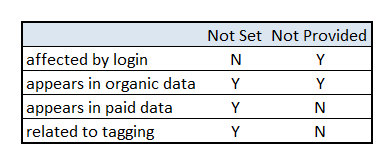
First, let’s begin with a quick review of (not set) keyword data. This is often linked with (not provided), but it’s actually very different. Not set results occur when something is lost between the AdWords click and the tracking on the analytics side.
It occurs most often with auto-tagging, or if there’s duplicate code on pages or duplicate analytics profiles connected to AdWords. Not provided is returned when a user performed a search with https://www.google.com and clicked on an organic result.
In a nutshell:
Review of Not Set and Not Provided
Differences in “Not Set” and “Not Provided” Keywords Reported by Google

The End Of Display URLs

No, display URLs aren’t going away. Google’s made a big change this year though that impacts what you can put on the end of your display URL. Forcing a subdomain (like www) onto each display URL cuts down your space by 4 characters. Here’s the catch: you can fudge this with three different techniques:
  1. If your URL plus your keyword is exactly 35 characters, Google will display it as you wrote it. For example: domainislong.com/keywrd-is-alsolong (note how it doesn’t have the www on it?). If your requested display URL is shorter than 35 characters, they’ll shoehorn a www. in front of it. Anyone who’s done a lot of AdWords testing knows that presenting a URL without www increases clickthrough rate.
  2. If your URL is longer than 35 characters by just a couple, they’ll adjust just enough to fit it. For example, the display URL in the screenshot below is 37 characters:Example of a Long Display URL
  3. If you have a lot of really long keywords, consider using keyword insertion to get around the character limits for them. If a display URL is longer than 35 characters, Google will shorten it automatically. This can help you get some additional real estate in extreme cases; but you’ll want to watch it carefully, since Google will decide how to shorten it, and it might create a branding issue for you.
Since a major component of Quality Score is the clickthrough rate of your ads, you’ll want to maximize every available opportunity to increase clickthrough, including the techniques described above.

Random Quality Scores Of 10

Everyone’s thrilled beyond words when their campaigns suddenly start showing QS of 10. But, take a closer look. We’re seeing many keywords with 10s that have never had an impression or a click. Never. In the history of the account. As soon as they are shown, the QS drops.
My question is: is there benefit to having some “empty” 10s in an ad group even if you never plan for them to be clicked on? Will this raise your average QS for the ad group, and therefore, your perceived value in the auction? We’re testing it, but we’d love to hear your feedback as well.

Pre-loaded Quality Scores

Another thing we’ve seen consistently in our tests is that our keywords and ad groups are receiving quality scores before they’re launched, which is remarkably consistent with what they end up being post-launch. More on this as it develops, but it would seem that you can tweak your campaign architecture, bids, keywords and other facets to maximize your opportunity before you even launch.
I’ve heard from other PPC experts that this is simply based on competitor data for the same keywords. We have a client with a completely unique service that is new to the market who saw QS in her account before we launched. And they weren’t all 10s, suggesting that it was at least partly based on campaign architecture.

Keyword Match Type Targeting

The final thing that we’re noticing has a significant positive impact on campaigns is matching keyword types within ad groups. By creating multiple copies of each ad group for all of the match types we want to target, we can maximize opportunity for impressions.
Add that to the pre-testing that we’ve been able to do with the pre-loaded quality score data, and our campaigns are really humming.

Bid Management & Why We Don’t Use It – At Least At First

The final key that we found is that bid management doesn’t work for newly launched campaigns. Owners of bid management programs will tell you it’s best to launch in the program and let the program “learn” the campaign.
While it’s true that the programs learn incredibly well, they have to have a good foundation to start from, or they’re learning the wrong things. We’ve found a significantly higher return on the campaigns that we launched and optimized manually at first.
It’s a ton of time and expense, but the per-keyword return is much higher in the long run if the bid management program is introduced after the campaign has been live for a few days or weeks (depending on volume).

The Future Of Quality Score?

As Quality Score gets more obtuse and confusing, we’re seeing a lot of bouncing around. For example, we had one keyword that didn’t get any impressions yesterday at all, but bounced quality score from a 10 to a 3 and back again several times.
Couple that with the recent changes in impression reporting, match types, display URLs and more, and I have to wonder… could we be seeing the first steps of phasing out QS altogether?
The last time I saw this kind of volatility in a metric from Google, it was back in 2007 when Toolbar PageRank was getting discredited and phased out. If you think about it, Google doesn’t really need to show us QS. We’ve gotten spoiled. They could just as easily decide not to show it anymore, even though they use it internally. What do you think is the future of Quality Score?

About The Author:  is a former agency executive turned consultant. Her consultancyJLH Marketing, Inc. is based in Raleigh, NC and specializes in search strategy, with an emphasis on intuitive user experience and successful customer acquisition.

Source : http://searchengineland.com

Share

Twitter Delicious Facebook Digg Stumbleupon Favorites More