Blog Disclaimer

The posts published in this blog are collected from different blogs or websites written by various famous bloggers/writers. I have just collected these posts only. These posts are not written by me. All collected posts are the great stuffs.

Blog Disclaimer

All content provided/collected on this blog is for informational purposes only, it is not used for any commercial purpose. At the end of any post, the visitor can find the link of the original source.

Blog Disclaimer

At the end of any post, the visitor can find the link of the original source. These posts are only for further reference to review/study latter. It’s a request to all visitors; please go through the original post by clicking on the source given below/above of every post.

Showing posts with label On Page SEO. Show all posts

September 11, 2013

Technical SEO - The Required Skills for 2013 and 2014

By Michael Martinez

We don’t agree on what “Technical Search Engine Optimization” is supposed to be so we won’t agree on what comprises “Technical SEO Skills”. Here are my definitions and why I think these skills are important.

Technical Search Engine Optimzation

These skills break down into four areas:
  1. HTML coding and analysis
  2. Server operating system administration and analysis
  3. Website architecture design and analysis
  4. PHP, Javascript, Perl, and similar language coding knowledge
There is a difference between “having some coding knowledge” and being someone who writes software for a living. I’m not sure if a “coder” is supposed to be different from a “software engineer” but I get the impression that anyone who bills him/herself as a “coder” builds Websites, plugins, themes, and stuff like that. My apologies to any coders who actually develop full-blown software applications. In my day, when we walked uphill through the snow both ways (barefoot), we called ourselves “(computer) programmers” and the guys who taught us how to develop software were “programmer analysts” and “systems analysts” (who often called the “programmer analysts”wannabees — but I digress).
Technical search engine optimization delves into code and operating systems. It’s got nothing to do with keyword research and link placement. Here is why you need these four skills.
HTML coding and analysis are important to any search engine optimization specialist who is asked to assess the design of a Website’s documents. For example, if you think that links embedded in Javascript are a problem for crawlers you need to learn more about crawlers (which falls into the area of “theoretical knowledge for SEO”). If you think that using 10 different formats for internal relative URLs is a bad idea for SEO, you’re on the right path.
If you are still arguing “tables versus CSS” you never graduated from SEO 101. If, however, you notice that CSS is being used to hide text on a site that has received a penalty, you may be on to something.
If you use “View Source” and see nothing wrong with a page that has a lot of white space in the code, you’re probably not ready to handle your own SEO accounts. If, however, you just look at the rendered page and hit PAGE DOWN five times before you get to the obviously keyword-stuffed, link-bloated footer that is “hidden” below the fold by 100 blank lines that most users will never scroll past — you’re well-versed in simple Web spam techniques and won’t be easily fooled by naive clients who are running around with spam shotguns blowing their own feet off every five seconds.
If you think in terms of “PageRank Hoarding”, “Sculpting PageRank”, and Siloing you will probably find lots of opportunities to speak at conferences but most likely you hand off the real technical SEO to someone who doesn’t fall for buzzword philosophy.
Server operating system administration and analysis is vital to technical SEO because this is where a lot of technical SEO mistakes happen. People write HTACCESS files with thousands of lines of code and ask why their Websites take so long to render. They drop 10,000 files into a folder/directory on their server and complain that it takes the server a long time to do anything.
If you can read a raw server log you’re ten miles ahead of the guy who trusts whatever Google Analytics shows him. And you probably know enough to filter your own IP address out of any analytics report after having to skip past it so many times in the raw server data. That Google Analytics guru is lucky if he doesn’t crap in his pants when he clicks on the ADMIN link.
There are two schools of thought when it comes to Web server operating systems: Microsoft and Apache. In reality there are MORE than these two environments but they are the big dogs who slug it out the most. Unhappily I’m not the best Microsoft IIS search engine optimization expert I know but I am at home on an Apache server.
If you spit and say, “Webmin! Fah! Plex! Ick!” because you’re a command line jockey, you need to take a time out. And if you seriously believe that UNIX-style pattern matching is actually a powerful tool — you’re just a Preschooler playing with the big boys. Regular expressions are an analyst’s nightmare for two reasons: they MISS a lot of stuff and they INCLUDE a lot of crap. “Why, hell, any EGREP guru can get around that,” you say confidently.
In 30+ years of working on UNIX systems, I never met or heard of such a person. Your mileage may vary but I’ll trust my judgment more than yours in these matters any day. Regular expressions are hard for most people to use because they are STUPID.
Real programmers don’t use regular expressions. ‘Nuff said.
You need to understand where the Web server software is installed and configured, how its configured, and how it differs from the operating system software. You need to understand how to manage operating system accounts, permissions, tools, and reporting functions. If someone says, “My Website keeps getting hacked” you need to know where the backdoors are so that you can look at what the hacker is probably seeing. Maybe it’s all coming in through the login screen, maybe not.
Knowing which operating system a Website (component) runs on tells you a lot about what kind of server-side optimization, presentation, and organization the Website can use. Waiting for the O/S guru to call in on Skype means you shouldn’t be doing this job.
Website architecture design and analysis is where a lot of people break into real technical SEO. It’s the easiest and yet the most complex of the four basic skill areas. It’s the easiest because you basically just start out by clicking on the pages of a site. You test the usability, findability, indexability, informability of a Website by trying to use it. Somewhere along the way you start to look under the hood to see if all the code is written in the same style or if it’s a hodgepodge of coding philosophies and scripts.
You really have to understand WHAT THE NAVIGATION IS DOING and HOW THE NAVIGATION IS IMPLEMENTED.
You have to be able to explain HOW THE PAGE LAYOUT WORKS and HOW THE PAGE PRESENTATION INTERACTS WITH BACKGROUND FUNCTIONS.
Are there widgets on a page? Are they internal or external widgets (same site or remote site)? Are they Javascript, Perl, PHP, or maybe some esoteric blend of things only a dark worshipper of Clark Ashton Smith would recognize?
Does the user have to battle his way through popups, automatically-loading videos and audio files, advertising boxes, and signup forms before getting to the boilerplate stub content that says, “No results found for [INJECTED KEYWORD]“?
If you look at a Web page and think it looks okay you’re not ready for technical SEO. There is *always*something wrong, somewhere on a page. It may not need fixing but it’s broken, out-of-place, and just plain technically wrong. You’re supposed to know that (and also to know when it needs to be fixed and when it can be tolerated).
If you’re thinking, “Well, the page titles and meta tags are unique” you seriously need to stop reading SEO comic books. It’s not about uniqueness. It’s about what things are doing. “Why is this here?” should be the most common question you ask. “What is this trying to do?” should be the next most common question you ask.
It doesn’t matter if you’re looking under the hood or at the rendered page. If you’re not questioning everything you see, you’re not being technical enough.
The conversation with the client or vice president may have to be dumbed down to “Here’s your problem right here, Herb. You’ve got a loose — BZZZZT!” But you still have to be able to explain to someone like me (or you) why that is Herb’s problem. Otherwise you’re just guessing.
PHP, Javascript, Perl, and similar language coding knowledge is important to technical SEO because you need to have a feel for how much time it takes a typical Web browser (or search engine spider) to assemble the content for a page and then render it. You don’t have to know how many microseconds each fetch requires — but if you look at a PHP script with 14 function calls in it and you don’t think in terms of “here are 14 function calls”, you’re sucking wind as soon as you look under the hood.
It’s not about how many scripts a Web page invokes — it’s about how many things (function calls and other codey stuff) a Web page is trying to do. In today’s bloated CMS environment a typical Web page may execute 100-200 functions just to assemble itself and render in a browser. That’s before the lights start flashing, the bells whistle, the videos fire off, and the advertising shows up.
You need to be able to scan all this crap and figure out quickly if it might have an unforeseen impact on search engine performance. You need to have a keen radar for mistyped code, mistyped file references, mistyped links, etc. Programmers or coders or the dumb guy who pasted all this crap together from 15 different Websites may have no idea of why they need to do something so they do it in what they think is the most efficient way possible.
I once had to load and read between 6 and 10 PHP scripts just to get to a function call that loaded a file, all because I was analyzing a Website that had created multiple layers of code with a PLATFORM, a THEME, a PLUGIN, and a MOD. PHP is a hellish coding landscape that sacrifices sense and sensibility for momentary convenience. Back when you were lucky to get 16K of memory to work with on a mainframe, PHP would have been laughed out onto the street. That kind of coding efficiency would help the Web tremendously today, but those days are gone.
All the Real Programmers have gone to the Havens and Sailed Over Sea. Either that or they got old and retired.
You don’t have to write your own themes and plugins. You just need to be able to sort through the dozens, hundreds, thousands of PHP files that a typical Web forum or blog or ecommerce site uses to find THE ONE YOU NEED (for whatever your need may be). If you are lost in that forest of files you have no business claiming to be versed in technical SEO.

Technical Search Engine Optimization Is About…

Needles in haystacks. Remember that image.
The technical side of the job is not to supervise the creation of Web applications and software. There are coders (developers) who are much better at doing that than you or I will ever be. Once in a blue moon you get an SEO who can code or a coder who can do SEO. Most people fall into one category or another.
If the Web were written in Business Basic I would pwn you all. Instead it’s written in HTML and PHP and I have to “evaluate” platforms and plugins and themes along with most everyone else.
So technical SEO is not about creating the forests of files; it’s about finding the problem that is causing the whole kit and kaboodle to wheeze and clunk and steam in all the wrong places. Your responsibility as a technical SEO is to dig through all the moving parts and find the one that is broken, jammed up, discombobulated, or otherwise neck deep in twisted wires and burned out fuses.
There are no keywords in technical search engine optimization. There are those who can do it and those who wish they had never tried. It’s not that hard once you learn the basic skills but it’s a time-consuming process.
You know someone has done real technical SEO when they provide you with clear, explicit step-by-step instructions on where to find the problem and how to fix it.
I’ll leave you with examples of bullet points that people who wish they had never tried to do technical SEO include in their blog posts when they try to write about technical SEO.
  • Think creatively
  • Figure out what keywords you want to use
  • Use Screaming Frog
  • Read this blog post here
  • Ask yourself, “Would Matt Cutts tell me to do this?”
  • Check back for more information later
  • Get your team together for some quality time
  • Quality content
  • Quality links
  • Google Penguin
  • A picture of (a cat, a snowball, the most interesting man in the world, etc.) with some words on it
  • A screen capture from Google Analytics
  • [Insert Danny Sullivan quote here]
  • [Insert Matt Cutts video]
  • Some complaint about how Google is evil and trying to screw everyone
  • A warm reassuring sentence about how Google is your friend
  • Some reference to weird food or drinks that only someone in Silicon Valley thinks is cute
  • Some reference to bicycling, triathlons, workouts, or vacations that only Googlers can afford
  • A self-congratulatory paragraph about their latest tool
  • Something to do with Twitter
  • Something to do with Facebook
  • Something to do with Pinterest
  • An aphorism about Social Media, Socia Media Marketing, or Mobile Search (what the HELL is freaking “mobile search” anyway?)
  • Glowing adulation for the company founder
  • A mild rebuke for someone who questioned a previous blog post
  • Any list of vague, obscure nonsense that obviously says nothing specific about anything in particular
Source : http://www.seo-theory.com

****Note : I am just sharing this Great Post Written  The visitor of this blog can directly view the original post by clicking on the source link given Below*****  

April 18, 2013

Developing On Page SEO Strategy

This Post is Written by Alexander Zagoumenov

There's a number of ways to categorize your SEO efforts (on-site and off-site, for instance). In this article I want to discuss on-site SEO elements as opposed to off-site strategy. In other words, I'll provide you with tips and tools to keep your site clean and have a great relationship with search engines. This article will be useful for both professional SEO (as a refresher) and novice SEOs (to get a perspective of on-site SEO strategy).
First of all, let me define the on-site SEO strategy. For further discussion, on-site SEO strategy is a collection of tactics to ensure that
  1. Search engines know about your site;
  2. Search bots can properly index your site;
  3. Your pages are well-formatted for SERPs.
Second of all, it's important to note that on-site SEO is not a one-time activity that you do at the beginning and forget about it. So, the following on-site strategy elements need to be monitored over time (weekly, monthly) depending on type and size of your site. Larger news sites need to be audited more often.
It is useful to get a hold of a good crawler tool such as SEOmoz where you can track changes in site errors and warnings on weekly basis. Or you can use desktop SEO tools such as Screaming Frog and Xenu.

Do search engines know about my site?

The way Google-bot works (discovers new pages through links) Google will eventually find your site even if you do nothing (a link or two from external resources are still needed). However, there's a way to 1) speed up the indexing process, and 2) ensure that all new updates (new pages / categories, etc.) get indexed in timely manner. Here's a couple of things to keep in mind

XML sitemaps

Sitemap.xml files are sitemaps in a format that is easy to understand for search engine bots. Such file is not created to humans (/sitemap.html/ or /sitemap/). It's located in the root directory of your site for search engines to pick it up. Learn more about XML sitemaps. There's a number of ways to generate such file once the site structure is finalized. Here's only a few of them:

Webmaster Tools

Webmaster Tools such as Google Webmaster Tools (GWT) and Bing Webmaster are the most direct doorway between your site and a search engine. These accounts will help you keep track of your site's health as it relates to search engines. So, ensure that you have such account created and your site's XML sitemap or feed is submitted.

Can search engines see what I want them to see?

To answer this question we need to make sure that there's nothing preventing robots from discovering pages inside the website. You can run a quick scan manually by searching Google for [site:www.domain.com] and taking a note of the number of results displayed. If it's about the same as you expected, then you shouldn't have a problem. If it's not, read on Let's take a look at several important domain-level and page-level.

Robots.txt

Robots.txt file is a file in the root directory of your website (yourdomain.com/robots.txt) that instructs search bots on what to index on your site. Read more about Robots.txt, what it is, how to configure it here.

404 errors

404 error pages appear when a page on the site is absent. Keep in mind, 404 errors happen, they are ok, nothing to panic about, but if your site is not prepared for it, such errors can damage your reputation and play a role in reduced rankings. Worst case scenario is when a user gets something like this
404 error, bad example
These pages are bad because they degrade user experience on your site. Of course your visitor can alter the URL in address bar and land on the homepage (yoursite.com/page-that-does-not-exist/) BUT most likely he / she will close the window / press the back button on the browser and never come back.
So in order to make sure you keep visitors happy and longer on the site (Google likes sites that keep users on the site longer), make sure you have a custom 404 error page.404 error, better example
Above is a good example that evokes positive feeling. However, here's a few things I would add to this 404 error page:
  • a few (2-3) text links to point people to popular directions on the site
  • a list (3-5) of options pointing to pages / posts related to the search query
  • a search field that would provide additional navigational opportunity

Redirects

It happens that you update / change URLs (due to a new site structure or specific page optimization) on the site. Once you did that, it's important to make sure that your XML sitemap is updated with a new one (and the old one removed). Also, it's a great idea to create a redirect from old to the new pages. The steps will depend on a server you are running but here's a good place to start.

URLs

Make sure your site's URLs follow a few rules in terms of depth, length, descriptiveness:
  • Fix URLs that are over 3-4 directories deep. Flatter URLs tend to index faster when the page is created. Plus it's less confusing for the bot and users.
  • URLs that are 100 characters long tend to rank worse. So, avoid stop words (in, a, the, etc.). Keep it short to 3-5 words.
  • Make sure your URLs are descriptive of the content on the page. Stay away from keyword stuffing the URL, but try to get a phrase in, if possible.
Here's a good read on changing URL structures on your site.

Titles

Your titles need to be short, specific and descriptive. It should tell an engine what the page is about in a short form. Avoid stuffing the title tag with keywords. Optimal title length is between 70 and 100 characters long including spaces. For dynamic titles I recommend you go from detailed to broad: Product > Category > Brand name. Read more in my earlier article here.

Headings

Make sure there's one h1 per page, it's descriptive, preferably short and includes your page-level target term. Headings (H1, H2, etc.) are supposed to divide your page content into logical sections, therefore presenting a value to search bots trying to understand what your page is about. Make sure your pages use heading, and those headings include your page's focus terms. Also, my rule of thumb: One H1, Two H2s and Three H3s per page. You don't have to follow this exactly, but make sure there's only one H1 per page.

Links (interlinking)

I've worked with a number of Yandex SEO projects. It appears that interlinking of pages is not as important for Yandex algorithm as it is for Google. So, if you're optimizing for Google, have a read on internal linking here.
Also, if you run a blog, forum, e-commerce site or a news site you are likely to have pagination issues. Learn more about the pagination issues for SEO and find how to solve it here.

Site speed

Users love faster sites. Therefore Google rewards faster loading pages with higher rankings. Make sure your site doesn't have slow pages that negatively affect your rankings and user experience. Test your site regularly using Pingdom or page speed test tools from Google.

Site analytics

Analytics can tell you a lot of things about your site performance (issues and speed) and your visitors. Regardless of what you use, Google Analytics or something else, make sure you keep an eye on content efficiency (how effective your pages are).
Want to create custom reports and save time in Google Analytics, check this guide from Google. Or feel free to import these templates by other people here and here.

Does my target audience like what it sees in SERPs?

Yes, it's important to rank highly on a search engine results page (SERP) but it's also key to ensure that users click on your results. Studies show that with the proliferation of rich snippets users tend to click on listings that provide 1) value proposition in descriptions and 2) additional information about the page through advanced search snippets. Let's look at both in more details.

Descriptions

Meta descriptions do not affect rankings, but they do affect your listing's click-through rates. A description that clearly shows the page's USP has a higher chance to be clicked on by the user. A few best practices on meta descriptions. Also, make sure to review this post on creating meta descriptions based on your PPC text ads.

Rich snippets & microdata

Same as good descriptions, search listings complete with rich snippets tend to get higher click through rates. Here's a good article on why rich snippets are important. Make sure your most valuable pages / landing pages have appropriate rich snippets implemented. Read my recent article on rich snippets. Use this Google's tool to test your pages for rich snippets. Want to see how your listing might look with microdata added, check out this cool tool.

In conclusion

Creating great content is primarily what it's about these days. However, if Google can't see your pages OR can't understand their relevance for specific terms OR if your listing looks incomplete and confusing, you'll be missing out a lot both in terms of rankings and actual search traffic to your site. As practice shows, on-site SEO is still very important to being successful in organic search.


April 17, 2013

SEO Copywriting - How To Structure Your Copy

You may think that your writing is so SEO-perfect that the Google angels sing when they spider it. But are you sure that your angelic writing doesn't contain some devilish SEO content mistakes? If you're writing content using outdated or incorrect strategies, you may be committing sins without even realizing it.

The simplest SEO copywriting definition is: The technique of writing the copy of a website so that it flows and reads well for a page viewer and features selected keywords and phrases that the site owner wants optimized so that the site ranks well for those terms.

That may sound simple but it’s really not that easy to define SEO copywriting content.

Why Is Copywriting Important?

If visitors land on your page, but click back, you’ll do less well at search. Recent changes in search algorithms mean your pages are likely being judged on how useful a user finds your page.
One way to hook readers into your site is by using well-crafted copywriting. If you convince more of your visitors to engage in a “desired action”, which is the end-goal of copywriting, then the more profitable your site should become.
As internet traffic gets more expensive, the sites using copy that converts more visitors than the competition will likely win the game. These sites will be more able to afford to invest in traffic generation.

If You Fail To Get Your Copy And Offer Right

If a searcher is looking for a good offer on a product, they might click the result at #1.
If they don’t find an offer to their liking, what do they do? They’ll likely click back. They’ll try another site further down the page. They may click on three of four results before they find the offer they want. They may rephrase the search query.
There is no point ranking well if the customer doesn’t like the offer, or the offer is not clearly articulated. There is SEO value in presenting a great offer. There is also SEO value in making that offer clear to the reader. The value comes from making the most of each visitor. The higher your conversion rates, the more distance you put between you and your competitors.

Integrating Copywriting With SEO

There are two aspects to SEO. External and internal. External aspects concern factors beyond your site. A search engine will rank your site by looking at links pointing to your site from other pages.
The second aspect is pages on your site. You have a lot more control over these pages. If you have interesting, well written content, then it is more likely people will be happy to link to you. Once visitors arrive on your site, it is more likely they will engage with your message. If your pages are on topic, and interest a reader enough so they don’t immediately click back, then your rankings are likely to increase.
Both external and internal factors must work together in order to get the most out of SEO. It’s not just about getting visitors to your site via search engines, it’s also about what visitors do when they get there. Poor writing, or writing that doesn’t hook people in, can lose hard-won visitors.

How To Structure Your Copy

 Copywriting Structure Example

1. Headline

The most important aspect of copywriting is the headline. It’s the hook that draws people in. If we don’t have a great hook, people are unlikely to read further.
In terms of SEO, the headline plays an even more important function. When a user clicks-thru on link text from a search result, they expect to see a similar headline on the page they land on. This serves as confirmation they have found a relevant result.
The title tag is a good place to use keywords terms. These will be displayed in the search result. If a reader clicks on your link, they’ve already committed to read further, so long as the headline on your landing page reaffirms their interest.

Appeal To Self Interest

Readers aren’t interested in you. Or your product. Readers are interested in themselves. Therefore, effective copy makes an appeal to self interest.
The three time-tested ways of appealing to self-interest are:
  • Outline Benefits
  • Make Offers
  • Provide News

Outline Benefits

A benefit is what the product or service does for the user. For example, an iPhone “holds the internet in your pocket”.
Benefits are typically stated as verbs. Benefits are active. For example, “the iPhone’s slim shape makes it easy to fit in your pocket”. You may notice I’ve rolled a feature – the slim shape – into a benefit i.e. “easy to fit in your pocket”. This is a powerful technique that intertwines the features and benefits, and thus makes them more memorable.
Benefits should not be confused with features. A feature describes an aspect of the product or service. For example, a 24 hour battery life. A benefit is something the feature enables the user to do. In the case of a 24 hour phone battery, the benefit is “you can go all day without plugging the phone into a charger”.
People care very little about your product or service. They care a lot about the benefits your product and service can offer them.
Try making a list of benefits to integrate into your copy. An easy way to do this is to make a list of features, then write next to them what each feature does for the reader.
For example:
  • Feature: 24 Hour Battery Life Benefit: You can go all day without a recharge
  • Feature: Run-flat tires Benefit: you don’t have to change a tire if you get a puncture
  • Feature: Padded headphones Benefit: comfortable to wear for long periods
When you come to write your copy, identify the benefit you most want your reader to remember, and work this into your headline.
Here’s an easy formula to remember when crafting headlines:
  • Take a verb
  • Add a desirable quality
Here are a few examples:
  • Drive all day without getting tired
  • Select the cheapest flights while you sleep
  • Clean dishes in half the time it usually takes, using half the water
Readers are certainly likely to want to read further as the unexplained benefit headline is an enticement to discover more. Also note that in the last example, I added two benefits to make the headline even more compelling.
In terms of SEO, it can be a good idea to work a keyword into a headline if you can do so without compromising the headline. It’s better to have a compelling headline than force an inappropriate keyword where it should not go. Keywords can be integrated elsewhere, if necessary i.e. in the body text and/or in the title tag. You only get one chance to make an impact, and a click back is likely to cost your rankings, and business.
You can look at benefits in a number of ways. Opportunities to “reduce pain” are a benefit. For example, “Clean a window in ten seconds using MicroClean technology”.The “pain” is that windows can take a long time to clean.
I’ve also added a proof i.e. “MicoClean Technology”. The reader may not know what “MicroClean Technology” is, but it creates a lead in for me to explain it in the body copy. If nothing else, the readers curiosity is aroused.
Make Offers
We’re all familiar with offers. “Buy one, get two free!” “Buy now, and pay nothing for the first 12 months”. “Fill out your email address and go in the draw to win a holiday”.
An offer makes for a simple, compelling headline. Offers as headlines work best when the reader is already familiar with your product. Offer headlines work less well when your product and service needs explaining.
Provide News
People like hearing news. They like the new, because change is inherently interesting. Two of my example headlines integrated a new(s) element:
  • Drive all day without getting tired
  • Select the cheapest flights while you sleep
Clearly, these headlines imply a change to the status quo. You cannot currently cannot drive all day without getting tired – well, most of us can’t – and you can’t book flights in your sleep. I’m setting up an expectation that I’ll provide information about a new way to do those things. If someone reads further, they will find out what it is.

2. The Body

The headline has one purpose. To get people to read down into the body copy. The body copy has one purpose. To get people reading to the close. Each line has a purpose. To get people to read the next line.
The First Line
The promise setup in the headline must be satisfied in the body copy. Once you’ve crafted a great headline, the first line of the body copy should come easily, as all you have to do is explain the headlines.
If we led with a benefit, such as “Drive all day without getting tired“, then the first line would explain the benefit i.e. how one can drive all day without getting tired? For example, a first line might be “when you drive long distances, your body aches. You get tired. But there’s now a great way to avoid those aches and strains, with contour car seat covers that gently massage your pressure points”
If we led with an offer, we explain the offer. If we used “Go in the draw to win a holiday”, then the first line would explain the offer. “All you need do is give us your email address, and you’ll go in the draw to win an all-expenses paid trip to the destination of your choice”.
If we led with news, we demonstrate the impact of the news on the reader. We demonstrate how the news will change their lives. If we used the headline “Latest in-home power generation unit means no more monthly power bills”, the first line of our body copy might be “Latest developments in home power generation units mean you need no longer pay line charges for grid electricity. Simply install a HomePower unit and it will provide all your electricity needs for up to a year. Your local dealer will then swap the replaceable power unit with another fully charged unit, and you’re good to go for another 12 months”.

The Three-Step Body Copy

The body copy has a beginning, middle and end. Obvious, of course. But why does this three-step format work so well?
It’s the format of stories. Stories are a very powerful means of communication.
A film will start with a depiction of the status quo, usually a problem the protagonists must overcome. We see the protagonist overcome the problem, and then reach a new status quo. Viewers like to see movement from stasis to a period of chaos, to a new stasis. Order. Disorder. Order.
This structure can also be applied to copywriting.
At the beginning of a movie, the main character will face some form of trouble in the first twenty minutes. In copywriting, that “trouble” is the problem to be solved.
If we look at our example, “when you drive long distances, your body aches. You get tired. But there’s now a great way to avoid those aches and strains, with contour car seat covers that gently massage your pressure points”
“Your body aches”. “You get tired”. These are the challenges our central character must face. You can identify “the pain” by examining your product or service and look at the problem it is solves. An SEO agency is trying to solve the problem of lack of visitor traffic from search engines. A car manufacturer is trying to solve a transport problem. A movie maker is trying to solve a boredom problem.
“The middle” is where you counter the problem. To use our example “when you drive long distances, your body aches. You get tired. But there’s now a great way to avoid those aches and strains, with contour car seat covers that gently massage your pressure points”. The middle is “But there’s now a great way to avoid those aches and strains, with contour car seat covers that gently massage your pressure points”. The solution to the pain of body aches is the “contour massage seat covers”. The contour solves the pain – in this case, quite literally.
This is also the point you can build credibility. People today tend to cynical, especially of exaggerated advertising claims. The headline and opening lines make some big claims – which sound great – but the reader now wants proof. If the middle fails to provide proof, you’ll lose them.
When providing proof, switch to factual mode. Describe features, make comparisons, expand on the characteristics of the product, talk about quality aspects, provide credible research data and endorsements from other customers.
The end of the story is when you bring the reader into the narrative. Up until this point, they’ve been interested, passive observers. Tell them what action they should take should they identify with the story. This action will save them from pain, or provide them the benefits – or pleasure – that have been outlined. They should ring this number now, make an order, sign up for an email, or whatever it is you want them to do. This is called….

3. The Close

Now is also a good time to restate the offer.
In long copy, you may need to restate the offer a number of times, but regardless of copy length, you should always do so in the close.
You then need to tell the reader how they can accept the offer. This could be and address, a form, a telephone number. It should be crystal clear at this point what the user has to do – make it explicit. If the reader has read this far, they are definitely interested – so don’t be shy about coming right out and saying what you want them to do.
This is also the point you may have to overcome final objections. This is tricky to get right, as you need to anticipate what the objections are likely to be.
In commerce, especially online commerce, people are concerned about security of their credit card numbers. Ensure you address this concern by displaying security badges and other safety identifiers.
People are concerned they are buying based on description, rather than seeing the actual product. If you can, try and offer free trial periods and money back guarantees to reduce the buyers risk. These offers can work well, because the number of people who claim their money back tends to be small, yet those who are put off if you do not offer such guarantees can be significant.
Buyers may also resist doing anything, because it’s easier to do nothing that to take the risk and do something. This is where time limited offers work well. If they don’t act now, they risk missing out. The fear of missing out is a strong driver to act.

Finishing Touches

There are various other tools you can use throughout your copy to give the final shine and polish.
Subheadings
Smaller headlines are particularly useful for breaking up long text. This is especially important online, because readers tend to scan.
Graphically emphasize important points using larger type, or different fonts and colours. Again, this can help connect with readers who scan. Not everyone is the same, so will react to different points you make. By using subheadings, you can can draw attention to multiple points that may otherwise get lost within the text.
Bursts, Callouts, And Sidebars
You can use images, different fonts, boxes to attract attention to individual points within the copy. Callouts help break up the monotony of a page full of text and draw attention to specific features.

Summary

When crafting a page:
  • Make a list of features and benefits.
  • Decide on the most important benefit. Make this your headline.
  • To craft a headline, take a verb and add a desirable quality.
  • The first line should explain the promise setup by the headline.
  • In the body, highlight the problem, and show how it can be overcome. Describe features and benefits.
  • End with an offer. Tell the reader what they need to do next.

By 
Source: 1)
2)  logo.gif in theme's image folder

April 12, 2013

Landing Page Optimization - How to Identify Testing Opportunities

If landing page optimization and conversion funnel testing are not on the list of items that you're currently focusing on, then you're not getting the most out of the visitors that are coming to your site. This is true for all types of websites, whether you want your visitors to make a purchase or donate so you can increase revenue, download a white paper so they can learn more about a specific topic, watch a video, spend more time engaging with the content on your site, etc. etc.
During the Landing Page Optimization session at SES New York 2013, Justin Cutroni (@justincutroni), Analytics Advocate at Google, discussed:
  • Why testing is important for your business. 
  • How to identify opportunities for testing through data. 
  • The different elements on a page you want to consider testing. 
  • What types of tests are available. 
  • Some tools you can use. 
  • The basic elements of setting up a test.

Learn Your Audience, Improve Your Results

Cutroni started off by talking about how to approach testing from a high level and putting it into perspective.
Start by thinking about your typical conversion funnel (i.e., the common steps that it takes for someone to complete an action on your website). The purpose of conversion funnel testing is to optimize that process ‐ you're trying to figure out how to get more people through the funnel more effectively by making it easier for them to take each next step through to the end.
Funnel
To help you understand what's going on in the conversion funnel, you have access to more data than ever before, e.g., you have click path data, micro conversion data, macro conversions, etc. And you can optimize around all these different data points.
What's great about testing, Cutroni said, is that you can automatically increase the return on a lot of things you're doing today. If you can improve the efficiency of your website through landing page testing, conversion funnel testing, etc. then you should do it.
If you can increase the amount of purchases, donations, signups, subscriptions, downloads, etc. (all of the different processes) on your site then you're going to get a much higher return on investment at the upper part of the marketing funnel, whether you're running display or search ads, focusing on search engine optimization (SEO) or content marketing.
This is why every business should be testing, but not enough do. The concept of figuring out and identifying what works best for your company, rather than just going along with the common recommendations or best practices, has been embedded in marketing for a very long time and is nothing new. You can see this in direct mail, product catalogs, store coupons, etc. just like you can with email marketing, content marketing, pay-per-click (PPC) advertising, and so on.

How to Identify Testing Opportunities

Start by looking at your data.
bounce-rate-google-analytics
You have tons of data, but there are some common places that people start to get an idea of how their pages are performing for their visitors. One of those is with bounce rate.
Cutroni recommended that you identify your top landing pages on your site and look for the ones that have a really high bounce rate.
So what’s a high bounce rate? According to Avinash Kaushik, Digital Marketing Evangelist at Google, "as a benchmark from my own personal experience over the years it is hard to get a bounce rate under 20%. Anything over 35% is a cause for concern and anything above 50% is worrying."
Bounce rate is subjective and depending on the pages you’re evaluating, what appears to be bad might not be. But in general, start with the pages that have a bounce rate over 50 percent, because if they’re bouncing they’re not taking the actions you want them to, e.g., they’re not adding products to the cart, they’re not viewing multiple pages in an article, and so on as Justin mentioned.
Once you have your bounce rates by top landing pages, Justin recommends taking a step back and asking yourself "why" you think the bounce rates are so high for a specific page or group of pages.
In order to help answer that question he created this handy Google Analytics Custom Report, called Landing Page Testing Ideas, which, in addition to bounce rate, includes the following engagement and acquisition metrics: average visit duration and % new visits. It also includes these outcome metrics: conversion rate, transaction, revenue and per-visit value (i.e., what’s the value of everyone coming through this landing page). Adding in these value metrics is really important and gives you a little bit more ammunition.

Why It's Important to Consider All This Data as You Build Your Testing Plan

Often times key stakeholders at your company may not know the value of website testing. So it’s your job to educate them. One of the easiest ways to do that is showing them how testing can affect the bottom line.
If you ever have any trouble trying to convince your boss, IT staff, or other teams that you want to start testing try and show them current conversion numbers, or better yet current revenue numbers, Cutroni said. This ends up being very helpful in the conversation because you frame the issue in a way that they already understand and likely already thinking and talking about.
Bounce rate is great, but when you can say, "look how much money we spent on this awesome new landing page but here’s how little revenue we received from it" then it starts to really resonate with people and get them on board with wanting to try and improve.
While you’re creating these reports with acquisition, engagement and outcomes metrics, don’t forget about the power of segmentation. For example, if you add another dimension that includes where people are coming from, with source / medium in Google Analytics, it gives you even more insight into bounce rate, and conversions and revenue, he said. A person coming in from email is likely to have a really different path and action than someone from organic, and so on.
google-analytics-source-medium

Key Takeaways From Two Case Studies

Cutroni then went into two case studies he included in his presentation, one for Kapitall, a new type of investment company that added a level of gamification into their training platform, and the other for Amari, a luxury hotel brand primarily in Asian countries.
Think about the audience coming to your landing pages and how that matches with what you’re trying to offer them (i.e., what’s your value proposition). Create an experience that is compelling for them to take the action you want them to take.
In the case of Kapitall that was coming up with landing pages that moved away from kind of the boring and straightforward white-background pages to something that had a game feel to them – an "Angry Birds"-themed page was the winner there.
For Amari that was creating supporting information and a clearer call-to-action up-front by finding out that online users were ready to book a room on their first visit to the website, i.e., they were lower in the marketing funnel.
Cutroni pointed out that it’s not always just about identifying high bounces, etc. It’s about understanding the bigger macro behaviors of those people, your potential customers, to see how long does it take them to complete something, what’s their intent, and so on.
By having the data to support that, you can start to develop and come up with a strategy for creating engaging content on a page that you’re sending people to.

What Kind of Test Should You Run?

Landing page optimization and conversion funnel testing has become much easier over time, and there are many tools and options out there to get started (e.g., Optimizely, Google Content Experiments, Unbounce). That said, you still have to plan for testing, and there are some things you need to understand about the pages that are involved.
Once you’ve gone through and identified a few pages you want to start testing, the next thing you want to do is figure out what type of test you want to run. Almost all of the testing platforms out there today support two types of tests:
  • A/B Testing: You have one landing page which is version A, or the control, and then you came up with multiple variations of that page to test against that control. This is probably the best way to get into testing, since the implementation is simple, and you have a little more free-reign over the creative.
  • Multivariate Testing (MVT): Cutroni likes to compare MVT to using a scalpel – it's an opportunity to really fine-tune the pages and the content on your site once you start testing. MVT is different than A/B testing, since rather than just doing a bulk change and testing different variations of full pages with A/B testing, you can carve up the page in different sections and you can test in real-time different combinations of these different sections with MVT. This can include headlines, text or content on the page, forms, buttons, etc. So you come up with two or three different variations for each of these elements or sections and then your testing platform will put them in a magic blender, shake it up and show the different combinations in real-time to your website visitors.

How to Set up a Test

When you running a test, there's usually not a lot of information that you need to give each tool. Here are three things you need to consider according to Cutroni:
  1. What are you testing for – what's your conversion event? Conversion events can include selling products, generating a lead, scheduling an appointment, etc. It really depends on your business model. But you want to test against something pretty specific. For example, don't just say, "here's a page that has a high bounce rate and I want to drive more conversions." Rather, start small with reducing the bounce rate first, and once you make progress there, you might discover there are other issues with the site that you need to fix before you can actually start to increase conversions.
  2. If you need to convince stakeholders internally to run tests on your site, one tactic you can use to reduce anxiety is limiting the amount of people that are thrown into the tests. Something great that most testing tools allow you to do is create a threshold of how many people you want to include in the test. You might have employees that feel like testing is going to end their world ‐ $X in revenue comes through the site every single day, and "why try and fix what's not broken." If that's the case, one thing you can do in addition to giving them your estimates as to what difference you can make, is showing them you can start small – you don't have to throw 100 percent of your traffic into the same test. Show them you can start with 50% or maybe even 25 percent of your overall web traffic. Most testing tools allow you to have some control in that area.
  3. You'll need to code all of the pages included in the tests. Almost all the tools out there require you to put some type of JavaScript on the page. And this is really where the magic happens ‐ where your website talks to your testing tool, and your testing tools says I want this person to see this variation. So it magically sends the different combinations in the multivariate test, or the right page in an A/B test. And it actually will display that test in real-time to the user. The cool thing is it does all the heavy lifting: it knows there are two variations, it knows how many conversions happened based on those variations, it does all the complicated math in the background to make sure the tests are significantly significant, etc. So make sure you get the code on the page so your website can respond accordingly.
So then once you start running the test, and your data builds, you'll end up with really pretty graphs that typically include the following:
  • How many people are flowing through your tests.
  • How your different variations are doing from day-to-day or week-to-week.
  • Do the different variations actually have a chance at beating your original.

What's a Good Length of a Test?

Sometimes people aren't really sure how long they should let us a test run to get to statistical significance, and they're just eager to just let a test run for 8 months. Not only does that make you impatient, but if devices are changing and the environments are changing then the test isn't really valid if it's stretched out over such a long period of time.
You really need to go just a couple or a few weeks for a test – nothing longer than two months according to Cutroni.

How Can You Test Pages on Other People's Websites (e.g., Third Party Sites?

This can come into play when you're using different vendors and third-party domains for your conversion events. This issue is that unless you can get your JavaScript code on their page, you can't really test on it.
That said, if they're going to let you put code on the site, then you can set up your tool to test different variations and versions. But that's really the only way.

Can You Apply These Testing Principle to Ads?

Yes, surprisingly 90 percent of advertisers are hitting pause, starting new ads, stopping them – a lot of activity is going on, and if you were to just check your ads to see if there was 95 percent statistical significance in their tests, often times you'll find there's enough to determine if there's a winner or loser.
Do Long Forms on a Page Suck in Terms of Driving Performance?
Cutroni agrees, yes, 99 percent of the time long forms suck. That said, as marketers some of the data that we base our assumptions off of is good, but it's not always great. And the only way you can really understand what's going on with long forms on your site is to track every step along the way.
It's unbelievable what you start to learn once you dive into the data; you'd be surprised what people will do if they're really interested in your site or what you're offering. So you always need to test something for your own particular situation before making any conclusions.


By
Source: Search Engine Watch

March 29, 2013

Google Webmaster Tools - A Basic SEO Guide to Getting Started


Google Webmaster Tools can be a powerful ally. But, if you make a mistake or put this power in the wrong hands, it can mean trouble for your search engine optimization. In this post, I provide a basic SEO Guide to Webmaster Tools to help get you started if you aren’t taking full advantage of WMT yet.
It is very important to point out that some of these things are more detrimental than others. Also, there could be multiple articles written about each of these tools and reports. This SEO guide to Webmaster Tools is a simple overview with a little insight.
SEO Guide to Webmaster Tools

Messages: Spam Warnings & Other Notifications

Priority: Medium / High
Many of us know that Google sends an email to Webmaster Tools if there is an issue with your site. If you don’t check Webmaster Tools messages frequently, you could miss an important piece of information.
An example of an important message would be an unnatural link notification. A message such as this could be indicator of a major issue, or it could result in almost nothing at all. It really all depends on how Google plans on dealing with your particular situation. Regardless, if you get any type of notification, it is important to figure out why.
Bad Link Warning
Bad Link Warning

Settings

Priority: High
In the settings tab, you can do three things: set geographic target, preferred domain and crawl rate.
Geographic Target
According to Google, “If your site has a neutral top-level domain, such as .com or .org, geotargeting helps Google determine how your site appears in search results, and improves our search results for geographic queries. If you don’t want your site associated with any location, select Unlisted.”
Make sure to set this up so that it targets your intended geographic market.

Preferred Domain

Google states, “If you specify your preferred domain as http://www.example.com and we find a link to http://example.com, we’ll consider both links the same.”
I always recommend setting a preferred domain based on the way you want your website indexed. To do this, you may need to verify ownership of both the www and non-www versions of your domain.
Crawl Rate
The last option in this area allows you to modify crawl rate. Google says, “Our goal is to crawl as many pages from your site as we can without overwhelming your server’s bandwidth. You can change the crawl rate (the speed of Google’s requests during the crawl) for sites at the root or subdomain level – for example, www.example.com and http://subdomain.example.com. The new custom crawl rate will be valid for 90 days.”
In most cases, Webmasters will let Google optimize the crawl rate for the website. But in some cases, Googlebot may cause some issues which make it necessary to alter the rate.
Settings Webmaster Tools

Sitelinks

Priority: Medium
Every website owner wants good sitelinks. If you don’t know, sitelinks are the links that show up under your domain name in Google search results.
Below are some small sitelinks.
Small Sitelinks
Small Sitelinks
Below are some large sitelinks.
Big Sitelinks
Big Sitelinks
Sitelinks are determined based on how much authority the domain has for a particular query. In many cases, we build sitelinks to assist with online reputation management because it pushes negative information further down the page.
No matter what your sitelinks look like, this section of Webmaster Tools allows you to demote your sitelinks. So, if there is one that you do not want listed for some reason, you can remove it.
A word of caution here. I have seen people demote one sitelink and then lose all of their sitelinks for months. Make sure you really want to demote that sitelink before doing so.
Sitelinks Webmaster Tools

URL Parameters

Priority: High
Webmaster Tools has a setting that allows you to specify URL parameters and request that Google crawl certain URLs and not crawl others URLs. This is an incredibly powerful tool. If you make a mistake, it can mean that a large chunk of your site is removed from the index.
I always recommend that people just stay away from this tool in general, in my humble opinion, it is a better option to use rel=canonical, no index/no follow, 301 or robots.txt when faced with most issues this tool alleviates.
But, if you need to use this tool, make sure you set it up correctly. Also, make sure the person enabling the tool knows the URL structure of the website inside and out.
If the site has a clean URL structure and the right person is using this tool, it can of course work well.
URL Parameters
URL Parameters

Change of Address

Priority: Medium
If you move, you need to tell someone correctly!
According to Google, “If you’ve moved your site to a new domain, you can use the Change of address tool to tell Google about your new URL. We’ll update our index to reflect your new URL. Changes will stay in effect for 180 days, by which time we’ll have crawled and indexed the pages at your new URL.”
Change of Address
Change of Address

Excessive Crawl Errors

Priority: Medium
If your website is not working and there are errors occurring on a regularly basis, this needs to be dealt with. In so many cases, I see sites with thousands of errors that are never addressed. Each error that affects usability can mean a potential lost customer.
Crawl Errors WMT
Crawl Errors WMT

Crawl Stats

Priority: Medium
This report shows you pages crawled per day, kilobytes downloaded per day and time spent downloading a page. Incidentally, there is a new Google Analytics report that also shows time downloading a page. The Analytics report, in my opinion, is much cooler. But overall, I like this set of reports. Think about it like this:
  • The more pages crawled the better (shows Google is interested and checking out content)
  • The more downloaded the better (unless there is an issue with Google wasting time on a area that should not be touched)
  • The more time spent downloading, the worse off you are. As you probably know page speed is an SEO factor. However, in some cases certain media just might take a long time to download.
Note: these rules are not applicable to all websites in all situations. They are just general guidelines.
Crawl Stats
Crawl Stats

Blocked URLs

Priority: Medium / High
In this report you can see the URLs that are blocked by robots.txt. In some cases, you will see areas of your site that are blocked which should not be. So, when you see this, unblock them!

Blocked URLs
Blocked URLs

Fetch As Google

Priority: High
The fetch as Google tool allows you to retrieve a page of your website as if you were Google. This can be very helpful if you want to verify whether or not a page is accessible. Sometimes, with very large sites, there are so many things going on, it can be great to have this simple tool to turn to. It can give you a straight answer. Can Google grab the page or not?
This tool also has the option to fetch pages as Googlebot-Mobile. This can be very helpful, particularly because of the elements that need to be put in place for the different forms of mobile optimization.
Fetch as Google
Fetch as Google

Indexed Status

Priority: Medium
The index status report shows you how many URLs are indexed out of all of those that Google can find on the website.
Here is an example of one way you can look at this report: say your website has 300 URLs in the sitemap; these are URLs you want to get indexed and probably the only ones you are aware of on the site. But, the index report shows that you have 3,000 URLs that are indexed out of 20,000 potential URLs.
Inconsistencies such as this scream issues with canonical URLs, duplicate content or just a Webmaster who does not know what he or she is doing.
Index Status Webmaster Tools

Malware

Priority: High
When someone injects code into your forum or comments area, that is an issue. Google will see this and deem it malware. When someone then visits your website there is a chance a message will be delivered saying this site is not safe for users. For this very reason, it is important to check your malware report.
Malware Webmaster Tools

Search Queries

Priority: Medium
The search queries tab gives you a rough idea of the number of Impressions and Clicks your URLs are getting in the Google Index. It shows your top queries and even breaks them down by Mobile, Image, Video, Web, Location and Traffic.
This report can give you an idea of rankings and traffic. But, it is very unreliable. Overall, it just provides a rough idea of where things are. If the chart has a spike or a trough, then it is a good idea to investigate.
Search Queries
Search Queries

Links To Your Site

Priority: Medium / High
We all know a link from a bad website can hurt you. We also probably all know that if you havetoo much anchor text for a keyword you will get an algorithmic penalty. In the link report in Webmaster Tools, you can see who has linked to you. You can also see your top anchor text. If you are not ranking for the term that is in your top anchor text, there is a good chance you need to get rid of some of those links.
This is the area where you can export all of the links pointing to your website and then review them. When you need to disavow links prior to a reinclusion request you’ll be spending some time in this area. In particular, when I am in this report, I look for low-quality websites that have tons of links pointing at the site. Usually, a global link from a low-quality site is a red flag for Google. We could go on and on about how to evaluate links here, but the important thing to know is that this tool exists.
Links to your Site
Links to your Site

Internal Links

Priority: Medium
Good internal linking really helps Google find pages. Also, when it done correctly, it can increase your rankings. The idea is that each link to page, whether internal or external, is a vote to rank that page higher in Google. So, if this is the case, consider the value internal linking can bring to the table.
The more links you point to a page, the higher the authority of that page in Google’s eyes. So, make sure to link to your most important pages for search often. But, just like everything in life, you don’t want to overdo it. Keep your internal linking within reason and have a ratio that relates well to other pages’ internal linking ratio on the site.
Internal Linking Webmaster Tools

Sitemaps

Priority: Medium / High
When it comes to sitemaps, you should be submitting at least one to Webmaster Tools; that would be the basic XML sitemap. Outside of this, you may also submit an image sitemap, news sitemap, video sitemap or mobile sitemap.
Regardless, check this area to make sure your sitemap is submitted and there are no errors. The more sitemaps the better, if you have the content to support them.
Sitemaps Webmaster Tools

Removed URLs

Priority: Medium / High
Google has a URL removal tool that allows you to request that a URL be taken out the index. Of course, you can only use this tool if you own the website. But, the issue is that people use this tool when they don’t understand it. In one case, I saw an employee use this tool to remove the home page of a very, very large website. No one could understand the huge drop in traffic until I found the request.
Recently, I saw a developer use this tool to remove over 50 URLs. Each of these URLs had page rank and would have been great to 301 redirect or simply modify and leave be. This tool is very powerful; don’t let just anyone use it.
Google URL Removal Tool

HTML Improvements

Priority: Medium
This report is a real gem. It allows you to see forms of duplicate content on the website from Google’s perspective. Click on the duplicate title tags link and you’ll see a list of pages that share the same title. This is a great way to find canonical URLs and other forms of duplicate titles and descriptions on the site.
HTML Improvements Webmaster Tools

Content Keywords

Priority: Medium
The content keywords report tells you the keywords that are most frequently used on the website. Of course, this has SEO implications. Post Panda, it has become important to have a theme associated with your website.
By having keyword groups that have a logical theme, you stand a better chance of ranking well in Google. If you are focusing on a difficult keyword, many SEOs will want to see that in the content keywords report.
Content Keywords Report

Structured Data

Priority: Medium
The structured data report tells you how many structured data items Google found on the site and how many pages it found structured data on. It also tells you how many types of structured data are on the site. I believe structured data sets companies apart and will be a very big part of SEO as we move into the future. This tab allows you to get a clear view of structured data that is on your website.
Structured Data
Structured Data

Data Highlighter

Priority: Medium
The data highlighter tool is a nice option for those who don’t feel comfortable with code. Instead, this tool allows you to apply structured data to your website without making any actual changes to the site. Instead, Google just saves this information and applies it to the site for you. Right now, it only works for event structured data, but they may add to this tool’s abilities in the future.
Data Highlighter
Data Highlighter

Other Resources

Priority: Medium
In this other resources area, we have three main things. Let’s touch on them briefly below.
This tool allows you to check that Google can correctly interpret and display your structured markup.
This free local platform from Google has now become Google +, but it is still listed here as Google Places. Please update Google!
This is the place to upload your product data. With the recent AdWords integration, it is important to connect this account with AdWords to do well in Google Shopping. If you want to learn more about this, there is a nice starter guide here.

Author Stats

Priority: Medium
This page shows you statistics for your author profile, should you have one correctly hooked up to the website. I actually use this a good amount when setting up rel=”author” for a new website just to make sure it is all correct and good to go.
Author Stats Webmaster Tools

Custom Search

Priority: Low
Did you know you can add a Google search bar to your website? It is true, and this is one place where you can get information on this. I’ve set it up for a few sites, and it works well. It has the advantage of allowing for site search reporting.
Custom Search Webmaster Tools

Instant Previews

Priority: Low
This tool is really similar to Fetch as Google. It allows you to fetch the website and then preview it from a perspective of On Demand Desktop Search Instant Preview, Pre-Render Desktop Search Instant Preview and Mobile Search Instant Preview.
In this section, they will also tell you if there are errors fetching resources. We are using the Ignite Visibility domain here as an example. There are a few issues, as you can see, but we are about done with a full redesign, so we will let them slide. You can see 9 errors fetching resources at the bottom.
Instant Previews
Instant Previews

Site Performance

Priority: As Low as you Can Go
Site Performance is no longer supported by Google. Google provides this information on the subject.
“Site Performance was a Webmaster Labs feature which we’re no longer supporting.”
Try these other resources for understanding and improving site performance:
  • Google Analytics Site Speed measures page load time as experienced by your visitors and allows you to measure other user defined timings.
  • PageSpeed Insights analyzes the content of your pages and provides suggestions to improve performance.”
I am a big fan of the PageSpeed Insights report.

Disavow Links Tool

Priority: Debatable
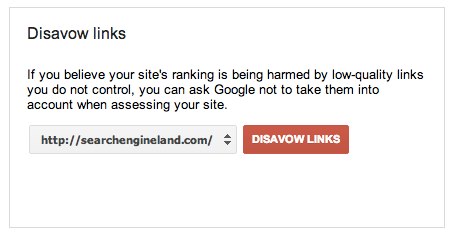
The Disavow Links tool can be very helpful or harmful, depending on how you use it. Matt Cuts, head of Web Spam at Google, has gone on record saying it is a power tool. But why? Well, if you block a good link you may lose rankings, and if you block a bad link it may help your SEO.
So, if you are using this tool, you really need to know the difference between a good and bad link before you use it. Most SEO experts will have criteria for dealing with bad link analysis.
disavow links tool
Although we touched on many points in this guide, there is so much more these tools can be used for, and  there are many ways to benefit from these tools and reports, but getting started is the first step! Search Engine Land has a complete archive of Google Webmaster Tools updates and WMT feature news to utilize as a resource as well. 

About The Author:  is Founder and President of SEO and Social Media at Ignite Visibility, a premier Internet marketing company based in San Diego, CA.

Source : http://searchengineland.com/

Share

Twitter Delicious Facebook Digg Stumbleupon Favorites More